

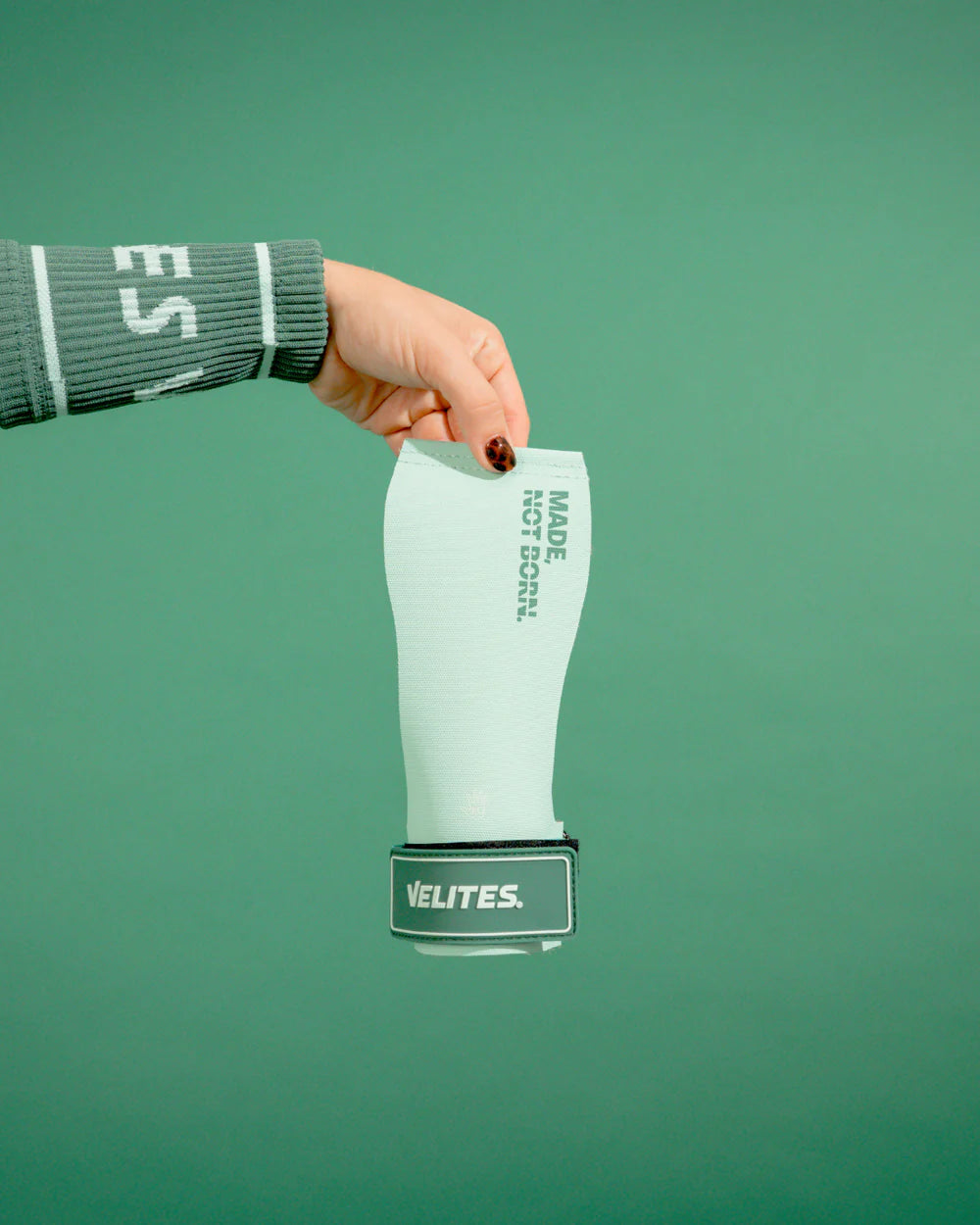
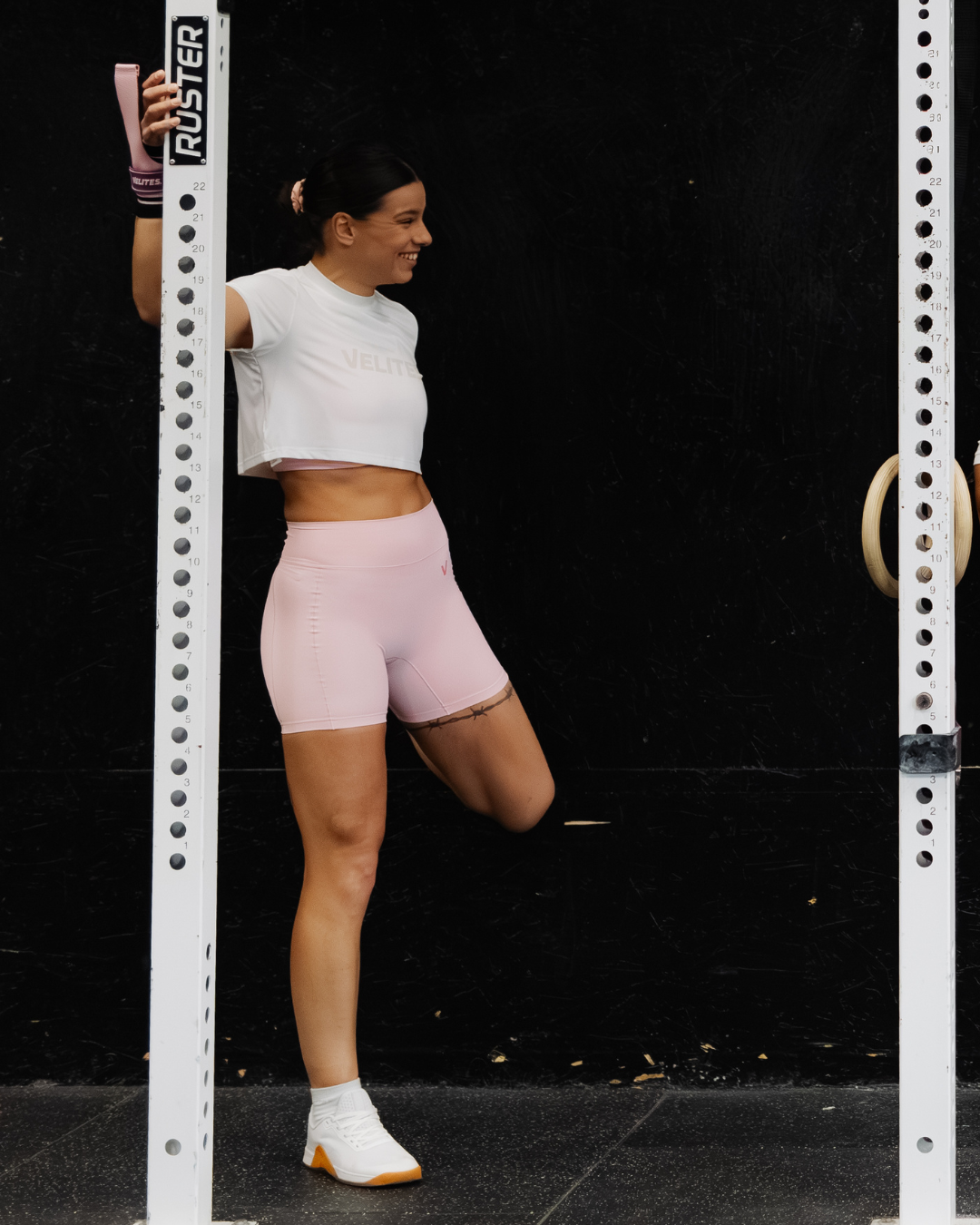
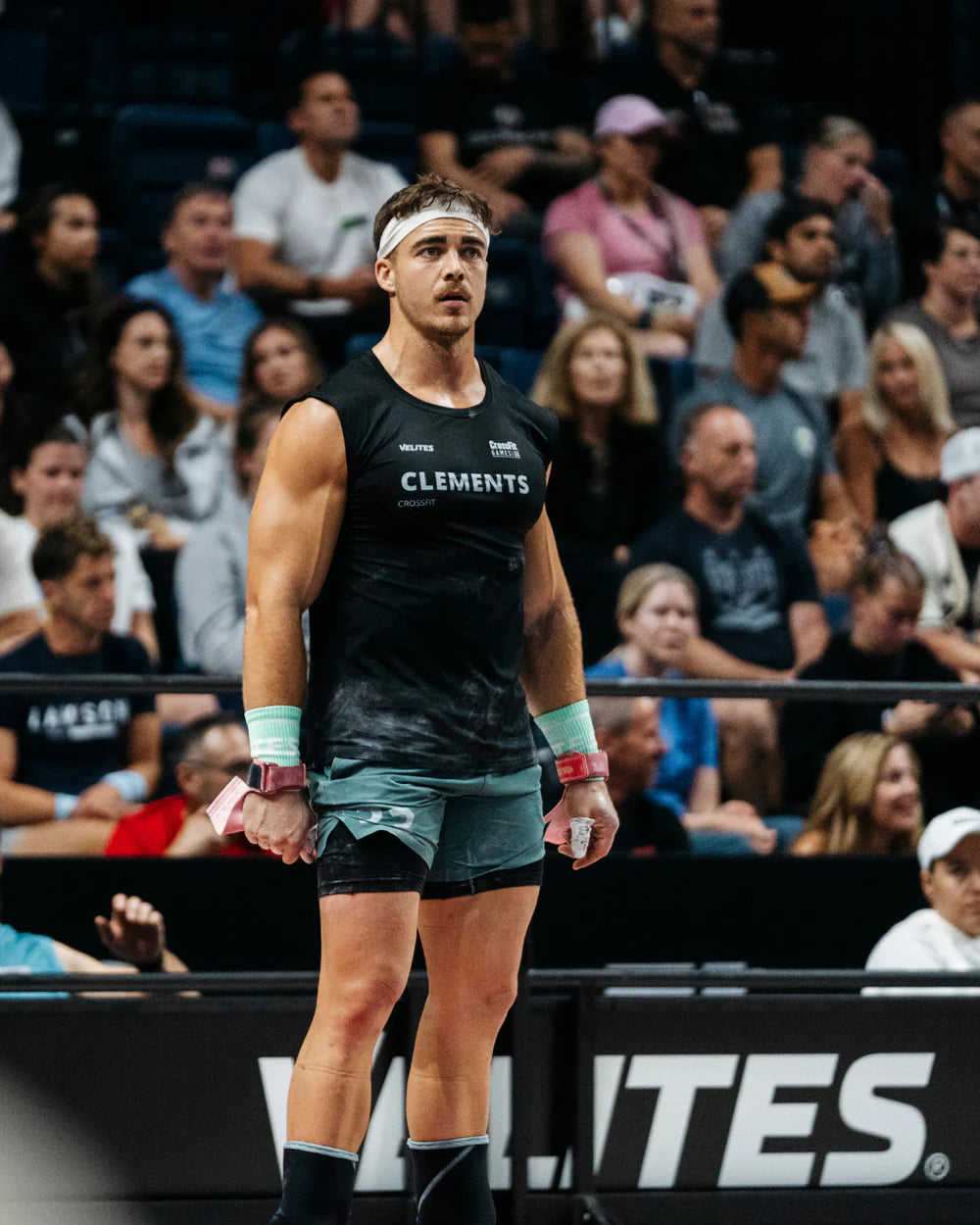

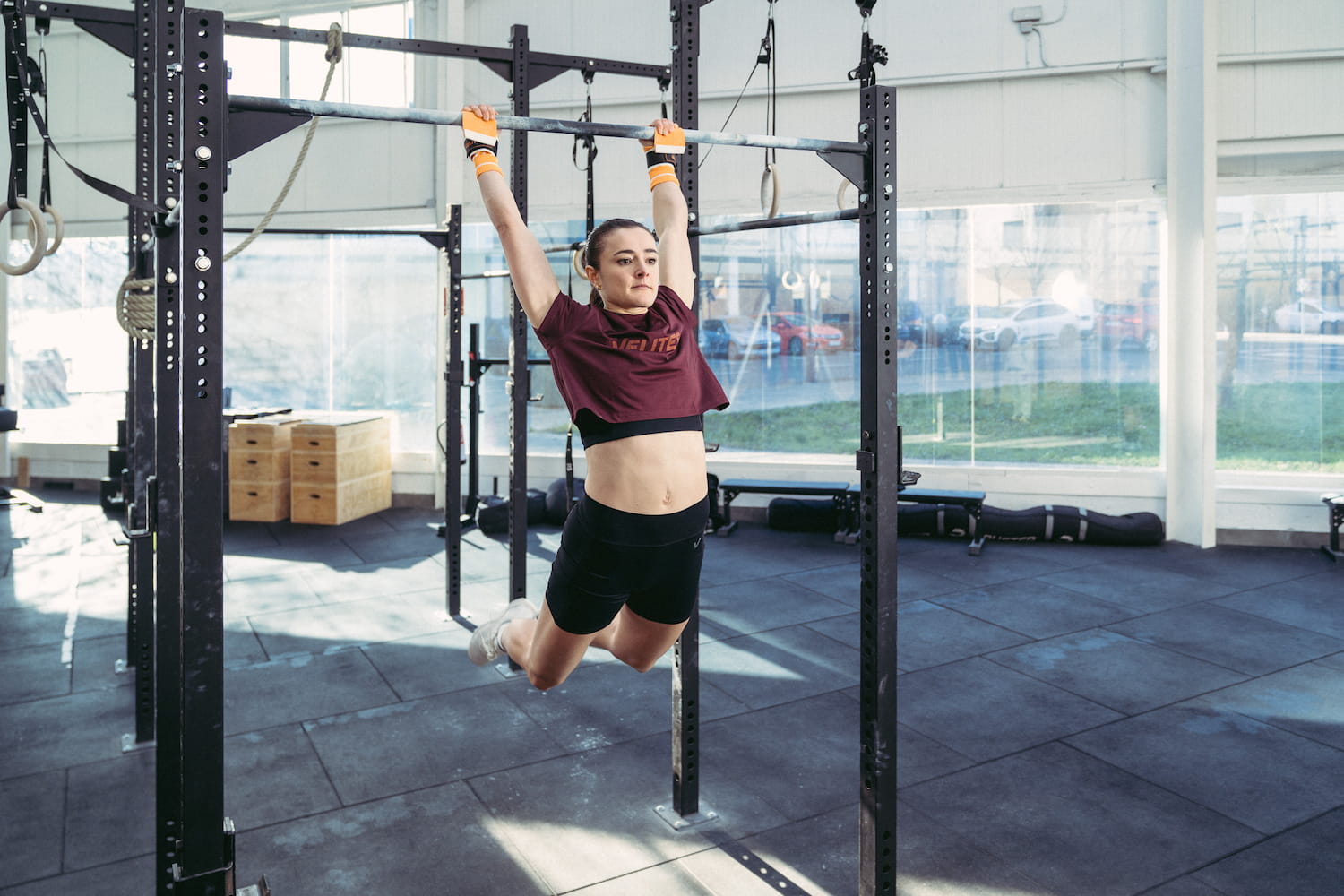
Grips help you train consistently, but not every movement benefits from a high grip without chalk. In movements that require rapid rotation of the hand, it's safest to choose a different option. Here I explain why and what to do instead.
Let's start with mechanics: when the hand needs to “roll”
Imagine your hand as a hinge. In some bar movements the palm must rotate and readjust on the steel: it is part of the movement. If you wear a grip that grips very tightly without chalk (the contact is very “fixed”), that natural rotation becomes complicated. It is not that the grip is “bad”: it simply doesn't fit that mechanics.
Easy rule to remember: if the movement requires rotation to enter or exit the position, avoid the high grip without chalk. You'll avoid scares and train more confidently.
Movements where we don't recommend a high grip without chalk
I don't want to give you a dry list; better I explain the “why” and then the cases. When the movement involves closing, sweeping and turning around the bar in a short time, you need the hand to be able to release and re-position naturally. The “ultra fixed” grip here doesn't help.
- Pullovers (the clearest case). The transition requires a hand turn. With a grip that “sticks” a lot without chalk, that turn gets blocked. Result: odd sensation on release or lack of control at the critical moment.
- Any variant with abrupt rotation in which the hand must “roll” quickly over the bar (for example, regressions or entry drills to bar movements where there is an accelerated change of angle). The faster the transition, the more you need to be able to release the hand.
Note: we're not talking about removing protection. We're talking about choosing the right tool for that movement.
Safe and simple alternatives (step by step)
The idea is to keep the protection but give your hand back the freedom to rotate when the movement requires it.
- Without grips to learn the pattern. In technical movements like pullovers, starting without grips helps you “feel” the rotation and release in time. Do it in easy progressions and with supervision if you're learning.
- Grips with chalk when you want protection and a “freer” contact. The chalk system doesn't seek that extreme “sticking” of the non-chalk option, so it usually allows a more natural readjustment in rotational movements. Velites recommendation: Quad Pro (general balance), Quad Carbon (very solid feel on rough bars) or Quad Competition if you're concerned about regulations in events.
- Adjust the amount of chalk. Whatever your grip, remember: a thin layer. Caking the bar does the opposite of what you want: it creates an irregular surface that sometimes sticks too much and other times slips.
- Smart progressions. Before the full movement, work on controlled hangs, hollow–arch, smooth entry and clean exit. Increase intensity only when you can release and re-position without thinking about it.
6 colors available

1 color available

And what about rings?
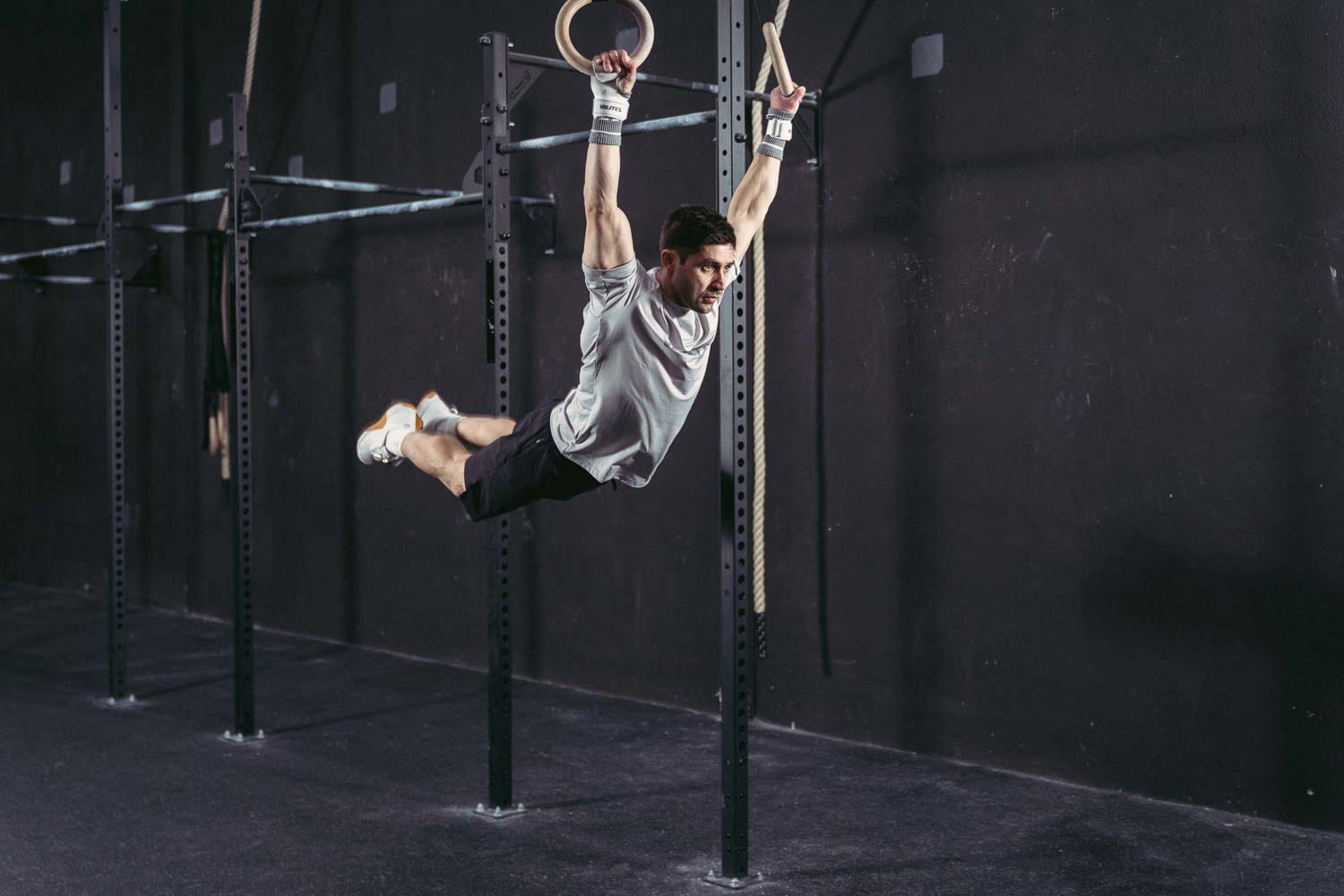
On rings (wood) friction is continuous and transitions are fast; you also need to be able to release smoothly. If you notice it “sticks” on release:
- Reduce the chalk to a thin layer.
- Prioritize a grip that feels more tactile and releases well. Velites recommendation: Quad All Terrain usually works especially well on rings because of that feel and stability on changing surfaces.
60-second safety protocol (before trying a new movement)
It's not bureaucracy; it's common sense. It saves you scares.
- Read the environment: clean or caked bar, smooth or rough, humidity.
- Choose the system according to the movement: if there's rapid rotation → avoid a high grip without chalk.
- Thin layer of chalk if you use a chalk system (never cake).
- Short test: hang for 8–10 s, do 2–3 progression reps and “listen” to the release.
- Plan B ready: if it doesn't flow, change grips or remove them and go one progression back.
Short stories that summarize the chapter
Irene and the pullovers: training with a “very sticky” non-chalk grip, the exit of the movement got stuck. She switched to Pro with a thin layer, did two entry progressions and the hand turn flowed. Same athlete, correct system.
Jaime on rings: with heat and a lot of chalk, he felt “hooking” on release. He reduced chalk to a minimum and switched to All Terrain. Result: clean transitions and zero fights with the wood.
Typical mistakes (and quick fixes)
- “If it won't release, I add more chalk.” No. More chalk can “stick” even more at the critical point. Remove excess and go back to a thin layer.
- “My favorite grip for all uses.” Better choose by movement mechanics. If there is rapid rotation, avoid the high grip without chalk and consider with chalk or without grips in progression.
- “I'm afraid to release, I tighten the Velcro more.” Extra tension = folds and loss of control. Adjust firmly and straight, not fully tightened. (If you doubt the size, check Chap. 6).
Frequently asked questions
Is it “forbidden” to use non-chalk in these movements? It's not a prohibition, it's a safety recommendation. If the movement demands rapid rotation, the ultra-fixed contact is not the best tool.
Can I alternate mid-session? Yes. Warm up with a free option (without grips or with chalk) to learn the mechanics and, when it's time for another block without rotation, return to your usual system.
What do I do if the judge won't let me clean the bar in competition? Adapt with the system and the grip: Competition to minimize rules doubts and, if the environment is unpredictable, have on hand Pro/Carbon (with a thin layer) or All Terrain depending on the event.
Keep exploring the complete guide:

Leave a comment
This site is protected by hCaptcha and the hCaptcha Privacy Policy and Terms of Service apply.