

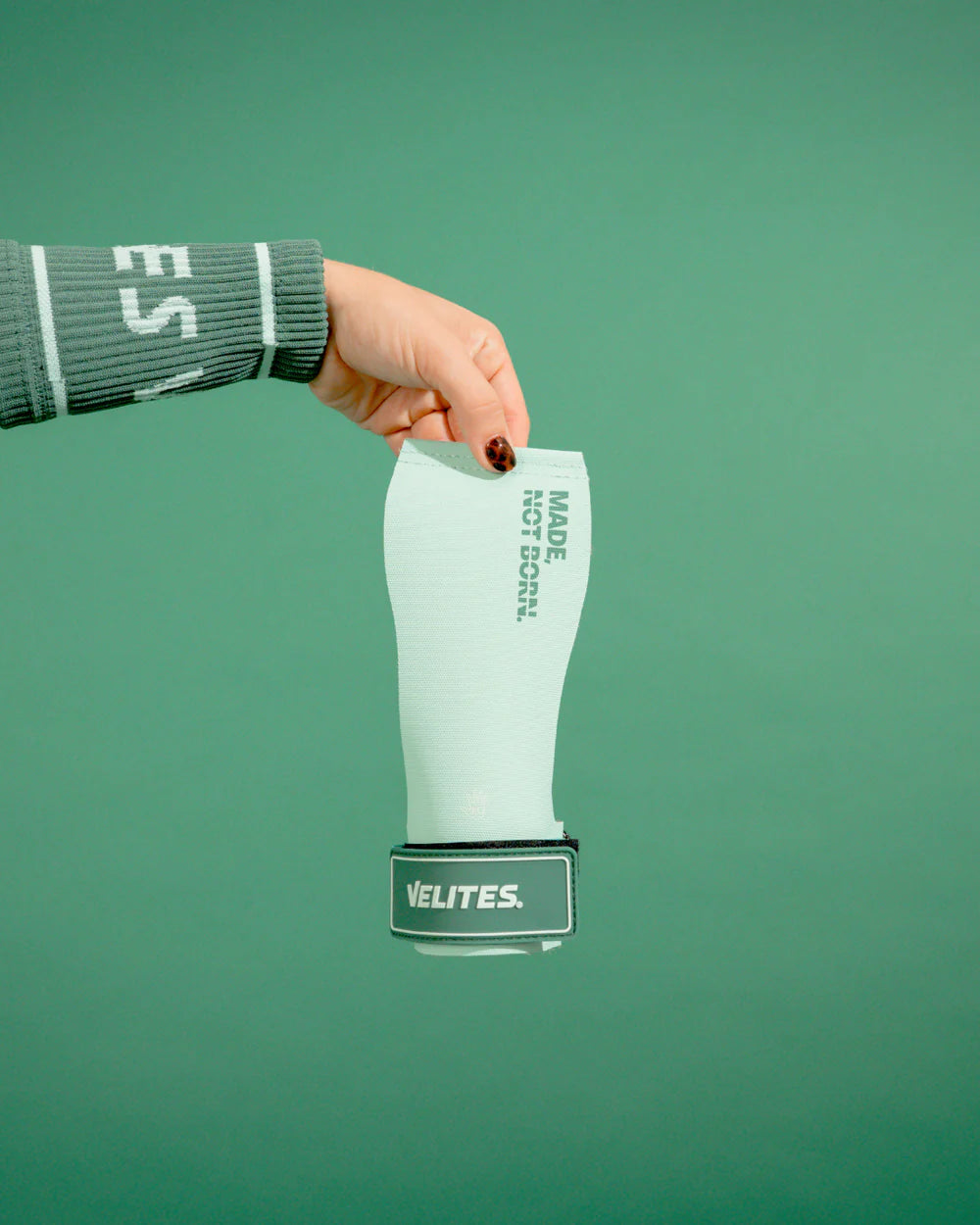
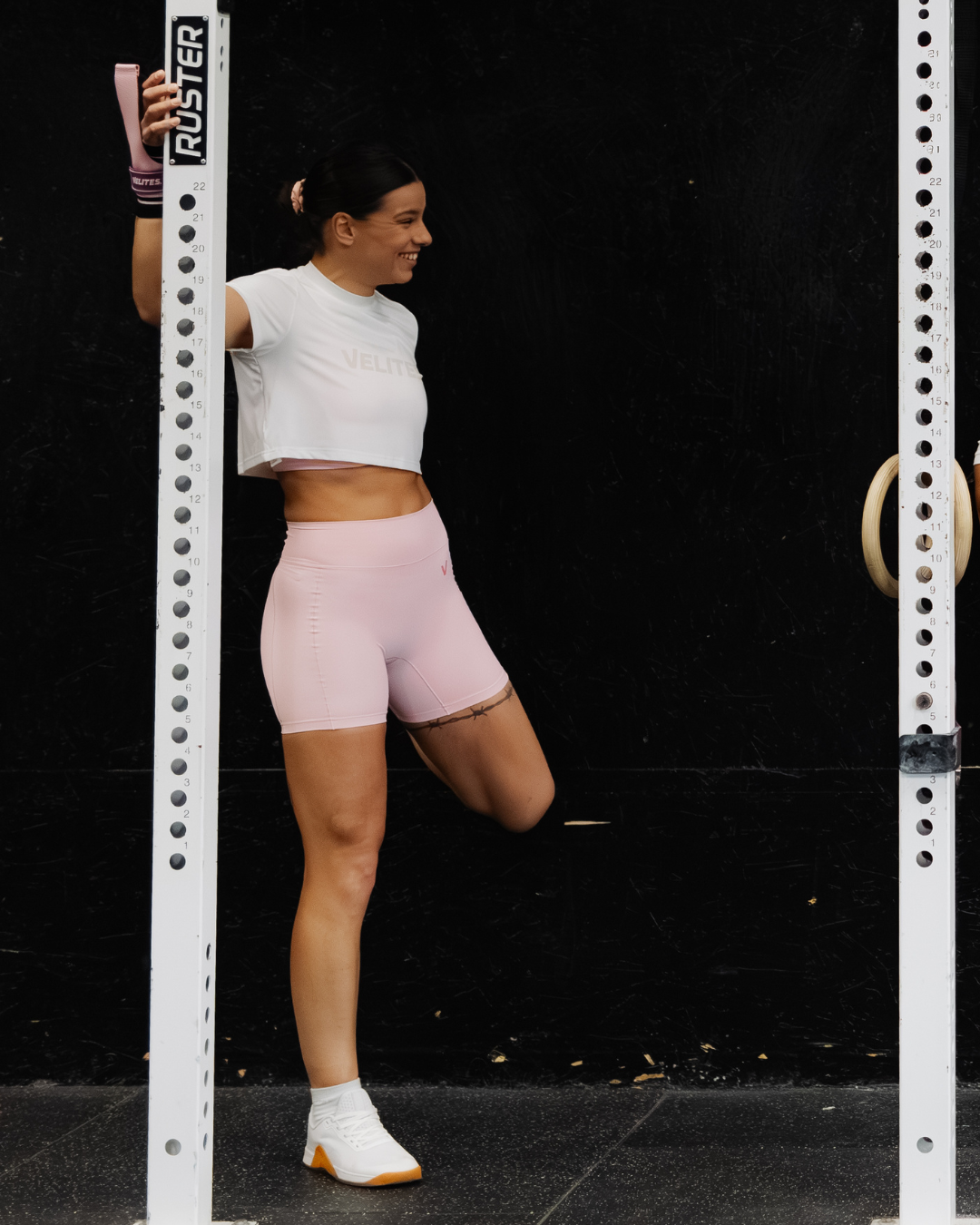
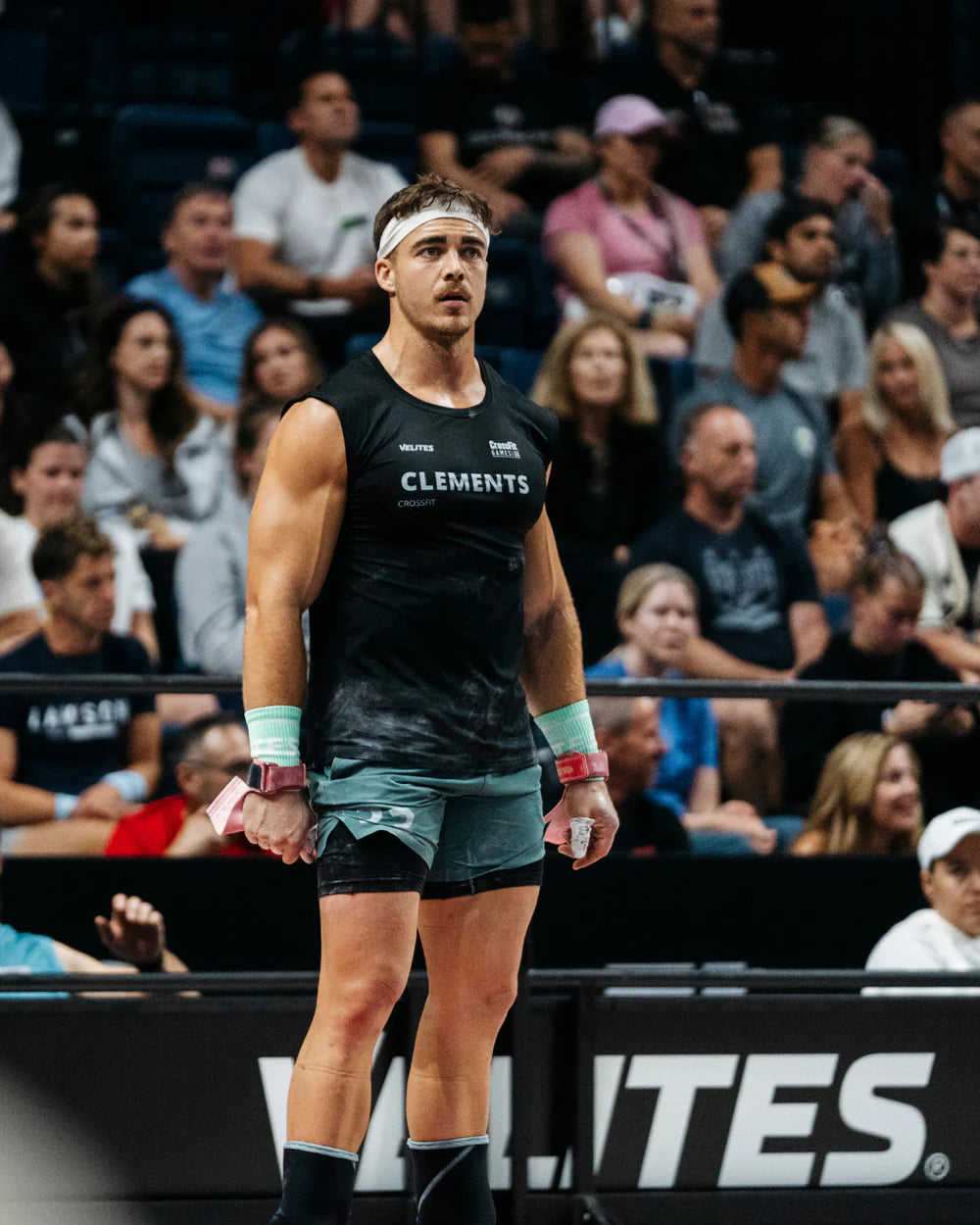
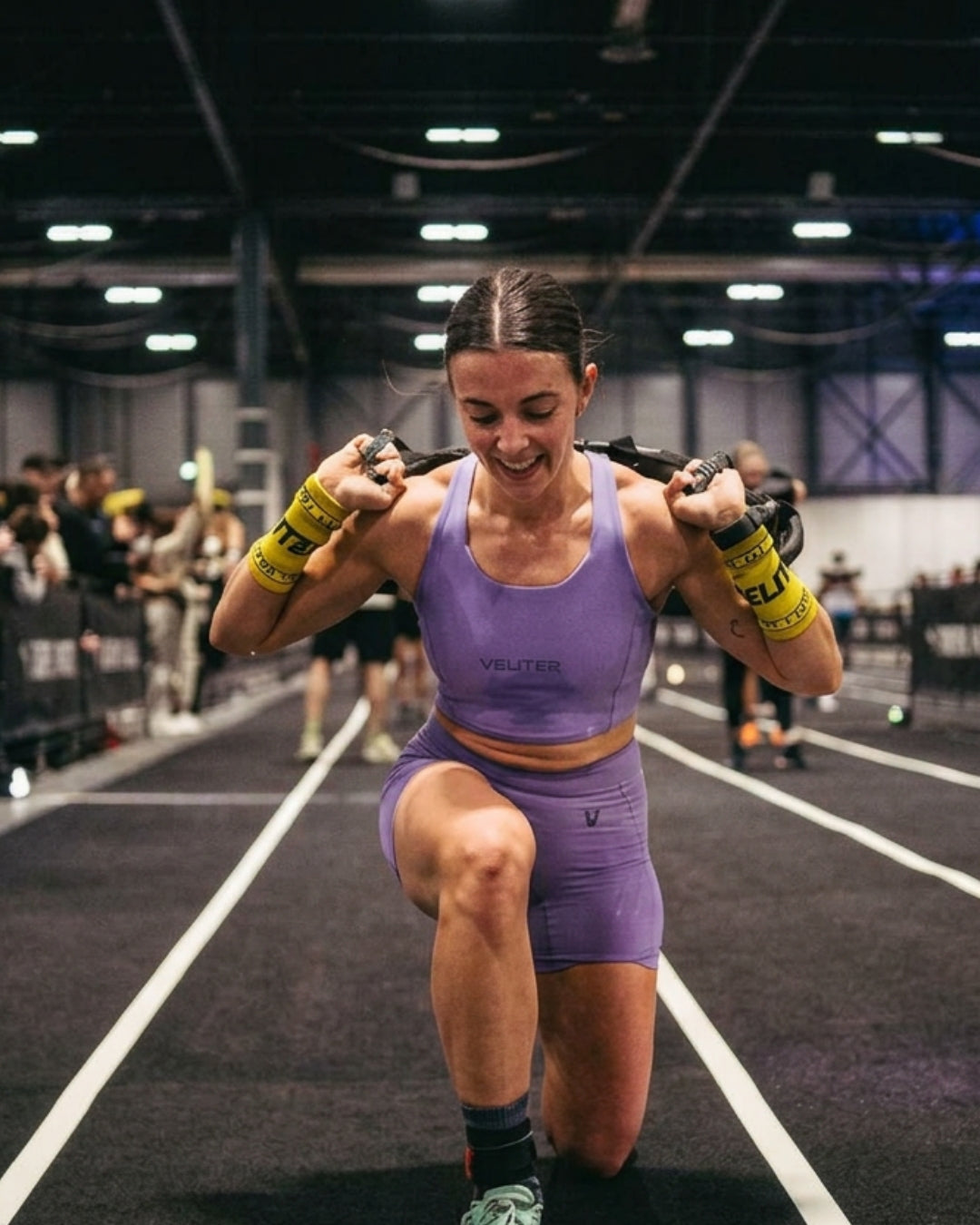
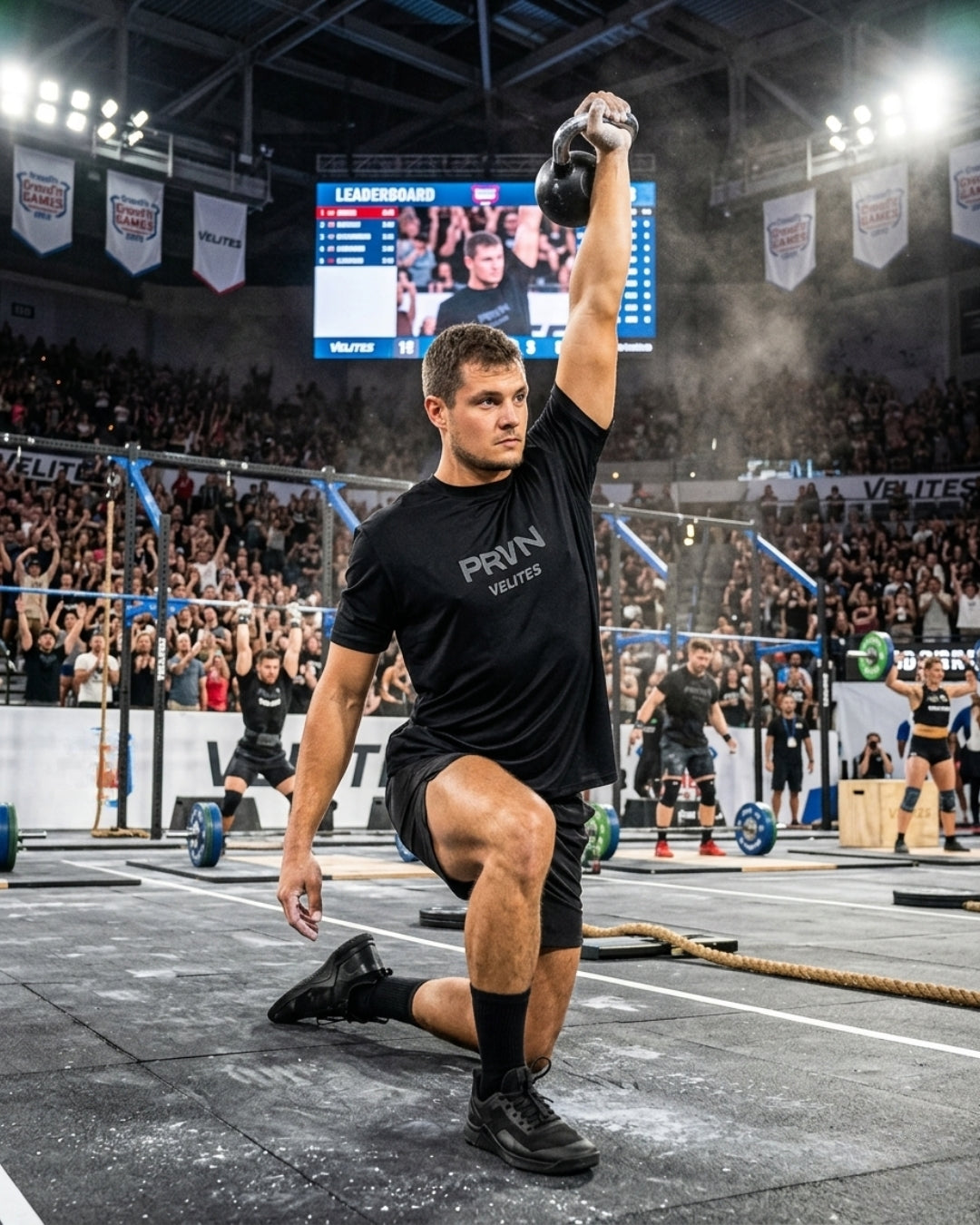
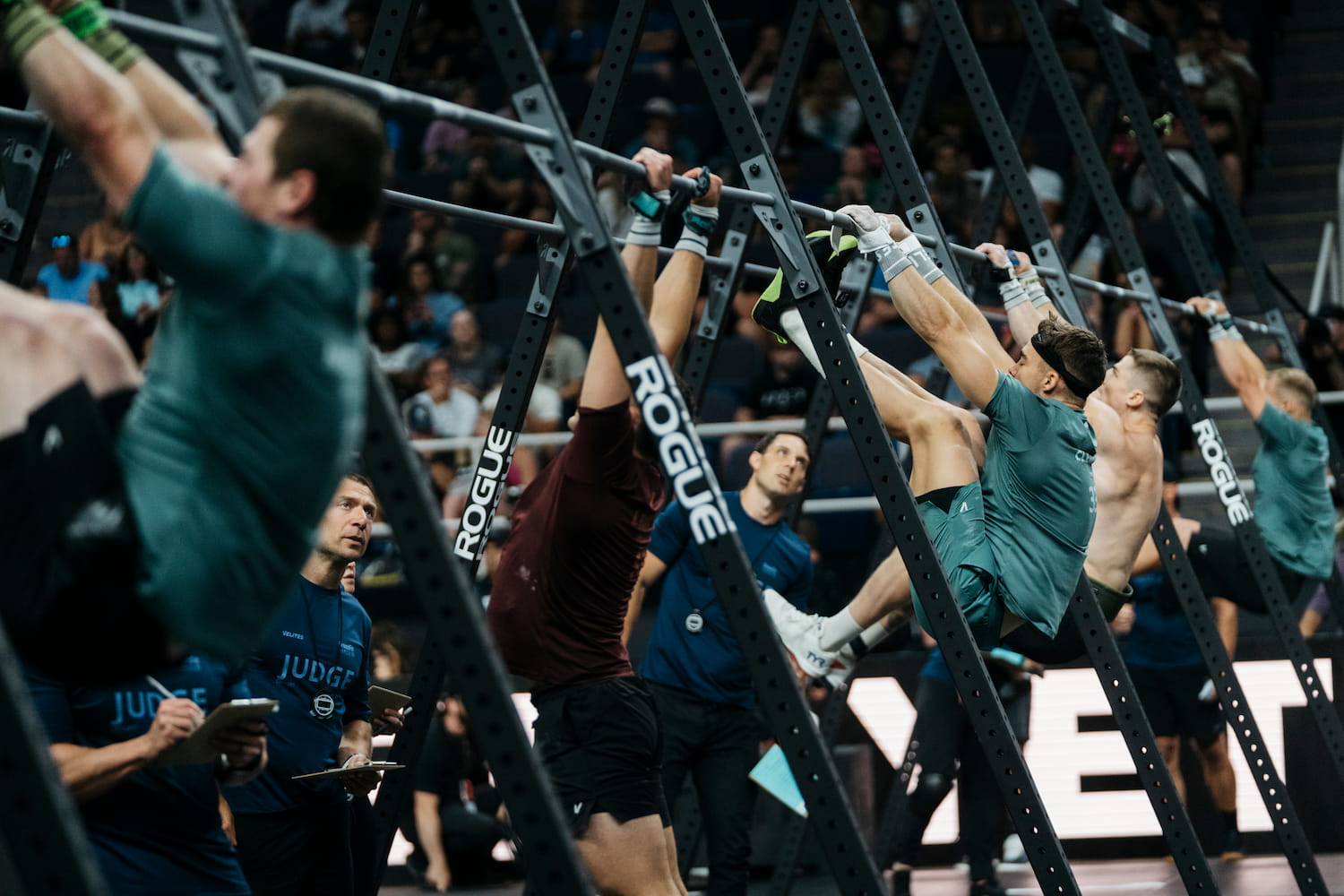
Velites manufactures five grip models: Quad Ultra, Quad All Terrain, Quad Pro, Quad Carbon and Quad Competition. Not sure which one fits you? In the video below, Matías (Velites CEO) and Andoni (Product Manager) review real use cases and help you decide in under two minutes.
If you prefer to read, this guide goes through the five models one by one with a quick comparison table, typical scenarios where each one shines and a final decision-maker.
The choice depends on two questions: do you train with or without chalk? what is the bar like where you usually hang from?. You don't need to memorize spec sheets. If you understand which system you use (no chalk or with chalk), what your bar is like and what feeling you're after, choosing a model is a matter of minutes.
👇 Video · 2 min · Matías and Andoni choose the grip in real scenarios
The map before the trip: two systems and a changing environment
To make this guide easy, start with one idea: there are two usage systems and “the road” (your bar) changes every day.
- Chalk-free system: direct contact bar ↔ grip ↔ hand. Fewer steps, more consistency if the bar is clean.
- Chalked system: you add a thin layer to manage sweat and friction, especially on rough bars or environments with lots of chalk.
With this in mind, let's go model by model. First I'll tell you when each one shines, then examples so you can see it in your daily routine.
| Chalk | No chalk | Chalk | No chalk |
| Bar surface | Smooth and knurled bar | Knurled bar | Smooth bar |
| Accessories | Wrist wraps + carry bag | Wrist wraps | Wrist wraps + carry bag |


Velites Quad Ultra (no chalk)
Before getting into bullets, place it: Ultra is the model that makes everything feel “on rails” when the bar is in good condition.
- What it offers: very stable grip without chalk and generous protection for volume.
- When it shines: on a clean, predictable bar; classes where you can choose or clean your bar.
- For whom: anyone who wants to stop “re-doing grip” and focus on technique from minute one.
- Typical feel: longer sets with fewer micro-pauses and your head away from the chalk bucket.
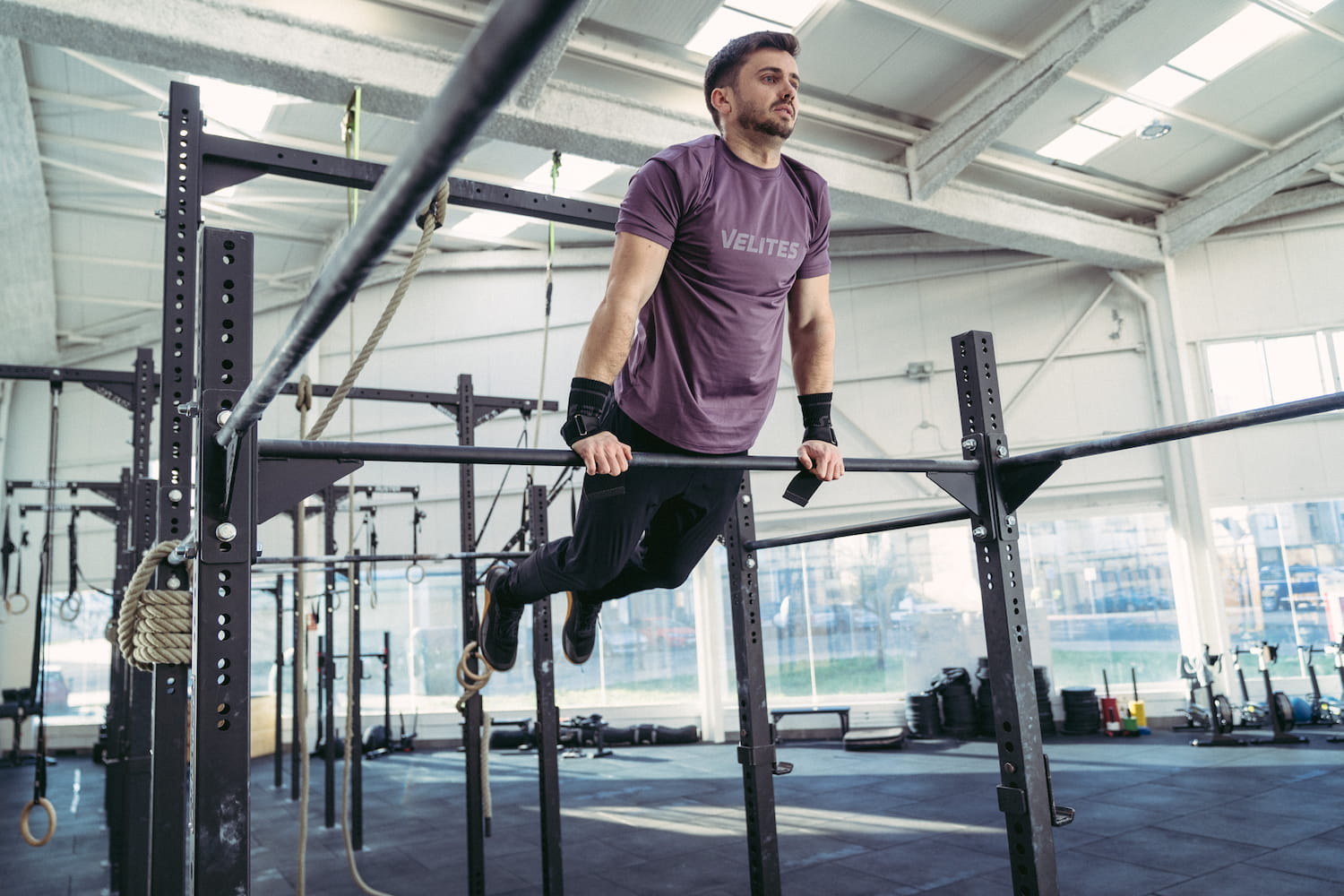
Real example: you arrive early, get a clean bar, warm up and string together 10–12 toes-to-bar in a row without thinking about chalk. That's Ultra doing its job.
View chalk-free grips → Ultra / All Terrain
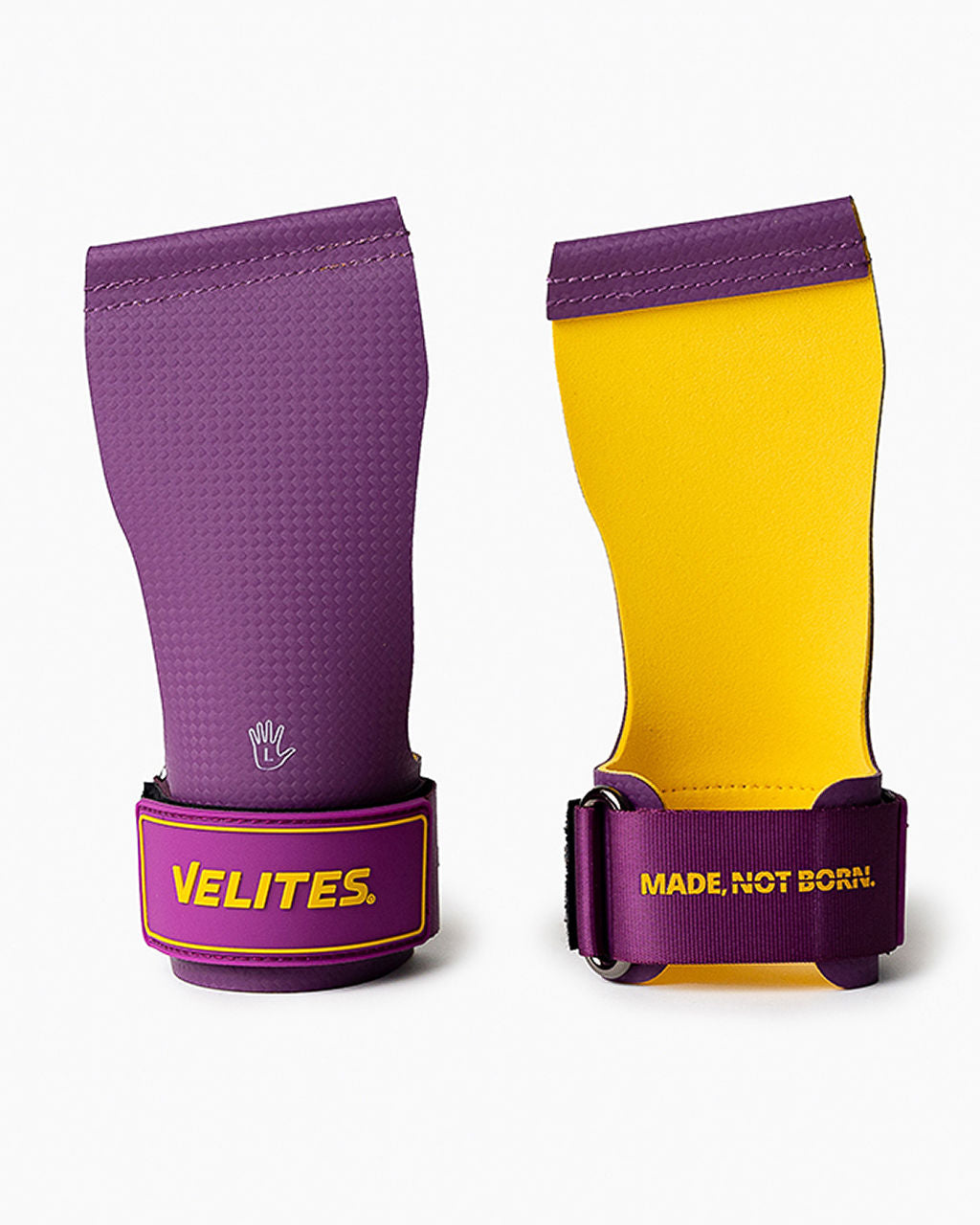
7 colors available
Velites Quad All Terrain (no chalk)
Think of All Terrain as that friend who adapts to everything. You don't always train in ideal conditions; that's why it exists.
- What it offers: stable performance when the surface changes (some leftover chalk from others, rings, peak hours).
- When it shines: in variable environments and days with bar-to-ring transitions.
- For whom: those who attend late classes, inherit a rig, or do drop-ins often.
- Typical feel: fewer “ups and downs” from one day to the next; the set flows even if the bar isn't perfect.
Real example: you hang on a bar that three heats have already used; you brush it for 20 seconds, do two test reps and the feel is consistent from start to finish. All Terrain makes the difference right there.
View chalk-free grips → Ultra / All Terrain
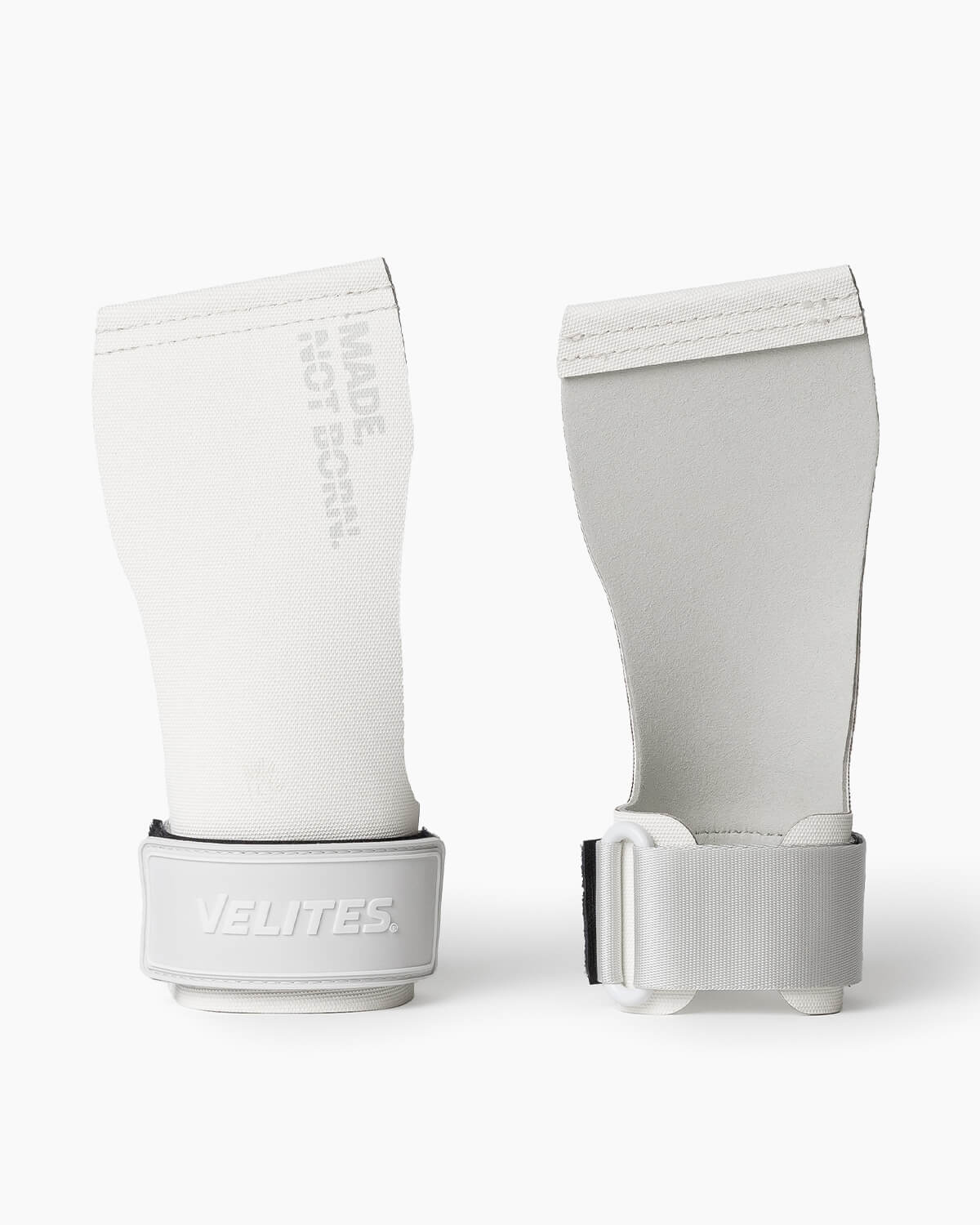
6 colors available
Velites Quad Pro (with chalk)
Now we change system. Pro is the middle ground of “classic, but smart”: well-applied chalk and solid protection.
- What it offers: balance between protection and control with chalk; it feels “easy” to understand.
- When it shines: on rough bars or hot, sweaty days.
- For whom: someone who trains with chalk 60–70% of the time and wants something reliable.
- Typical feel: secure contact without punishing the palm when the knurling bites.
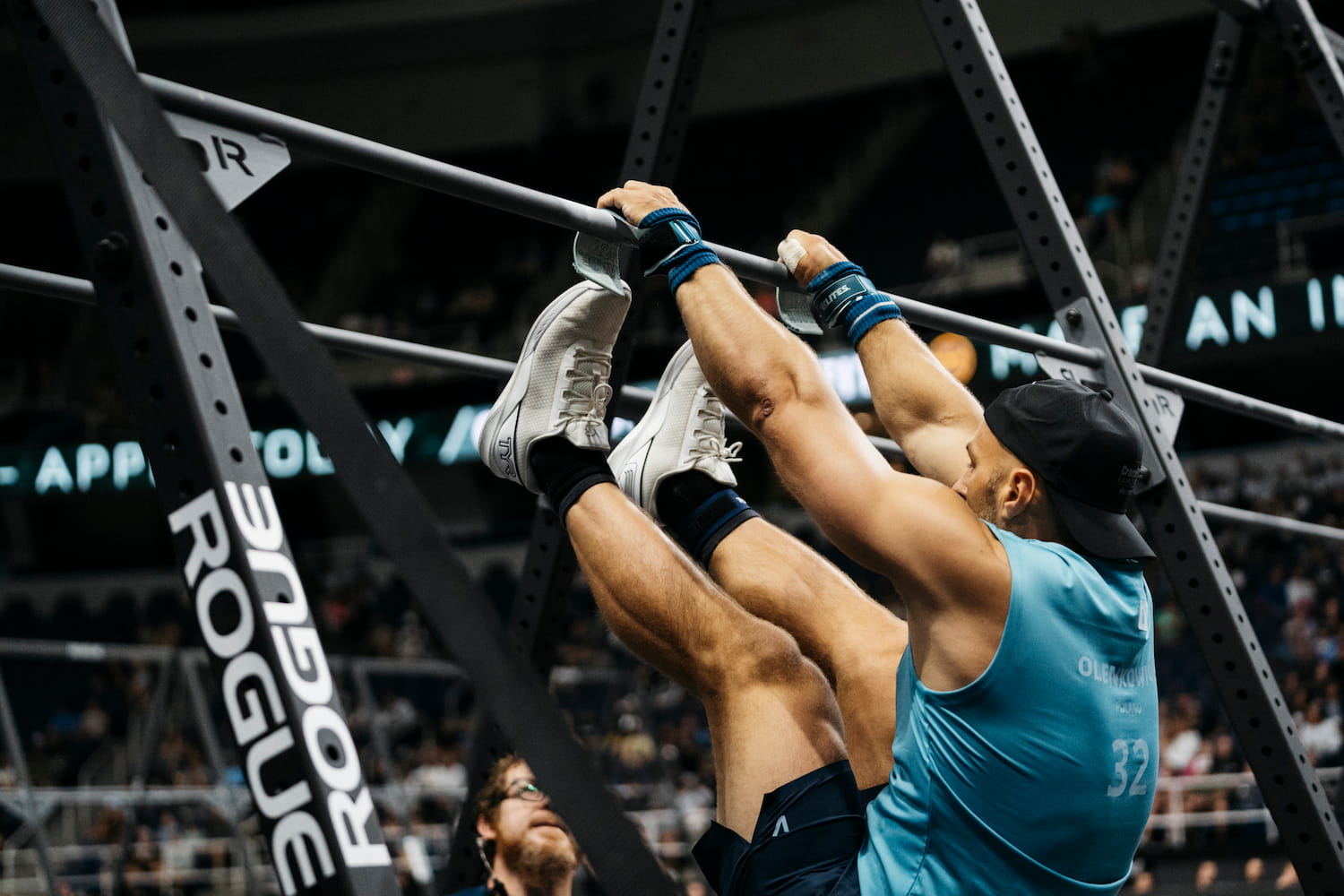
Real example: summer evening, rough rig and long WOD: thin layer of chalk, Pro well positioned and sets that don't fall apart.
View grips with chalk → Pro / Carbon / Competition
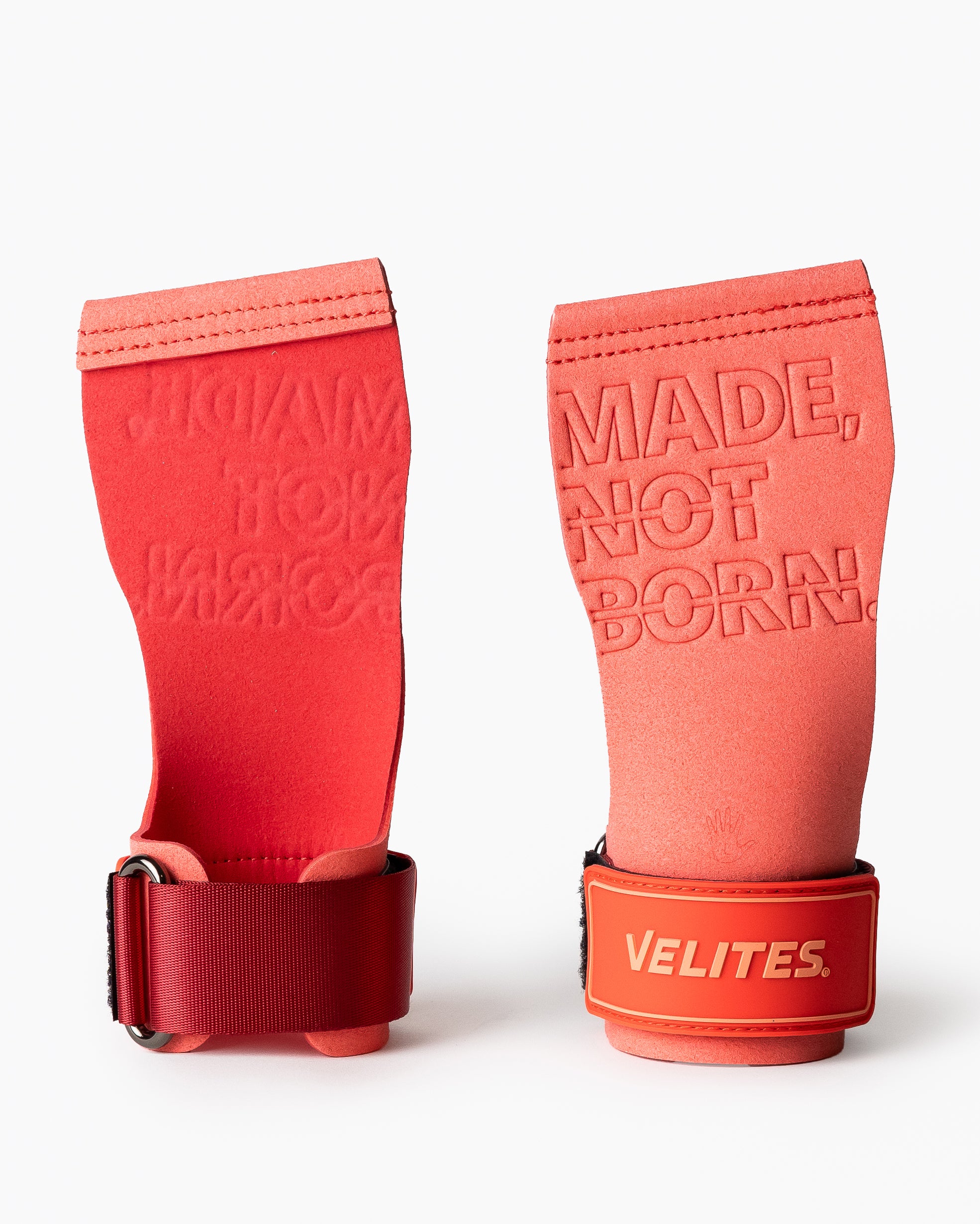
6 colors available
Velites Quad Carbon (with chalk)
From afar it may look like Ultra, but it plays in chalk mode. If your bar is rough or the box is a “chalk lover”, it's hard to go wrong.
- What it offers: a very solid feel with chalk, especially on bars with pronounced knurling.
- When it shines: when the rig “bites” and chalk is definitely in the equation.
- For whom: those who want the “anchor” version for chalk use: stable, predictable, robust.
- Typical feel: secure grip, fewer surprises on release and consistent protection.
Real example: a qualifier at an unfamiliar box with rough bars: Carbon + thin layer of chalk = your head returns to the WOD.
View grips with chalk → Pro / Carbon / Competition

Velites Quad Competition (with chalk | rules-focused)
Here the goal isn't just to perform: it's to avoid problems with the rules and keep protection under pressure.
- What it offers: design oriented to competition compliance and peace of mind on the big day.
- When it shines: events with strict rules or total uncertainty about the bar.
- For whom: competitors who want to minimize arguments with judges.
- Typical feel: calmness: you put them on, do your short test, thin layer if needed, and compete.
Real example: confusing briefing, different judges per heat… Competition removes one thing from the worry list.
View competition grips → Competition

1 color available
The decider in 10 seconds (explained for humans)
Before you hang, take 10 seconds for this mini-read: cleanliness, texture and sweat. With that mental snapshot, the choice comes by itself.
Clean, predictable bar → Ultra (no chalk).
- You want to “go on rails” and forget about the bucket.
Variable environment (some leftover chalk, rings) → All Terrain (no chalk).
- You want stability even if the surface changes.
Rough bar + chalk use → Pro (balance) or Carbon (very solid feel).
- With chalk, always a thin layer, never “caking”.
Competition / rules doubts → Competition.
- Compliance first; sensations later.
Extra tip: if you're unsure between two, think about your real routine: do you have 30 s to clean and test? If not, pick the one that performs best without ideal conditions (All Terrain or, with chalk, Carbon/Pro).
Comparison by scenarios (as it happens to you in the box)
Sometimes it helps to “see yourself” in the scene before choosing. Here are three:
Scene 1 – Morning class, free rig, dry hands
Choose a clean bar, brief test and Ultra. You forget about the bucket and your technique improves.
Scene 2 – Busy evening, bar with residue and rings afterwards
Quick brush, two-rep test. If it feels stable, All Terrain; if sweat is heavy, add a thin layer of chalk and switch to Pro.
Scene 3 – WOD with volume on a rough bar
Don't argue with the steel: Carbon with a thin layer. Flat fit, no folds. Your hands will thank you tomorrow.
Common mistakes (and their simple fixes)
I don't want this part to be a cold list. Read it as “what we see all the time”.
- Confusing Ultra and Carbon because they look similar. Ultra shines without chalk; Carbon is designed for use with chalk. If you use chalk often and the rig bites, Carbon is your home.
- Caking the bar “to be sure”. More chalk ≠ more grip. Thin layer and brush between blocks if needed.
- Choosing a small size “because my hand is small”. What matters is what it covers when hanging. If in doubt, go up: better protection covering than exposed skin where it rubs.
- Debuting a model on event day. Compete with what you train with. Your bar-reading routine is worth more than any last-minute change.
Quick questions
Can I use All Terrain with a bit of chalk?
Yes, if humidity demands it. Its strength is performing well without relying on the bucket, but a light layer doesn't break its “character”.
If I have Ultra, do I need another pair?
Not necessarily. But if you do many drop-ins or often get rough bars, Pro or Carbon cover you for 99% of “difficult” days.
Is Competition only for competing?
It's where it makes most sense. For daily training, it's usually more comfortable to stick with Ultra/All Terrain (no chalk) or Pro/Carbon (with chalk).

Leave a comment
This site is protected by hCaptcha and the hCaptcha Privacy Policy and Terms of Service apply.